Gob Squad's 1984: Back to No Future
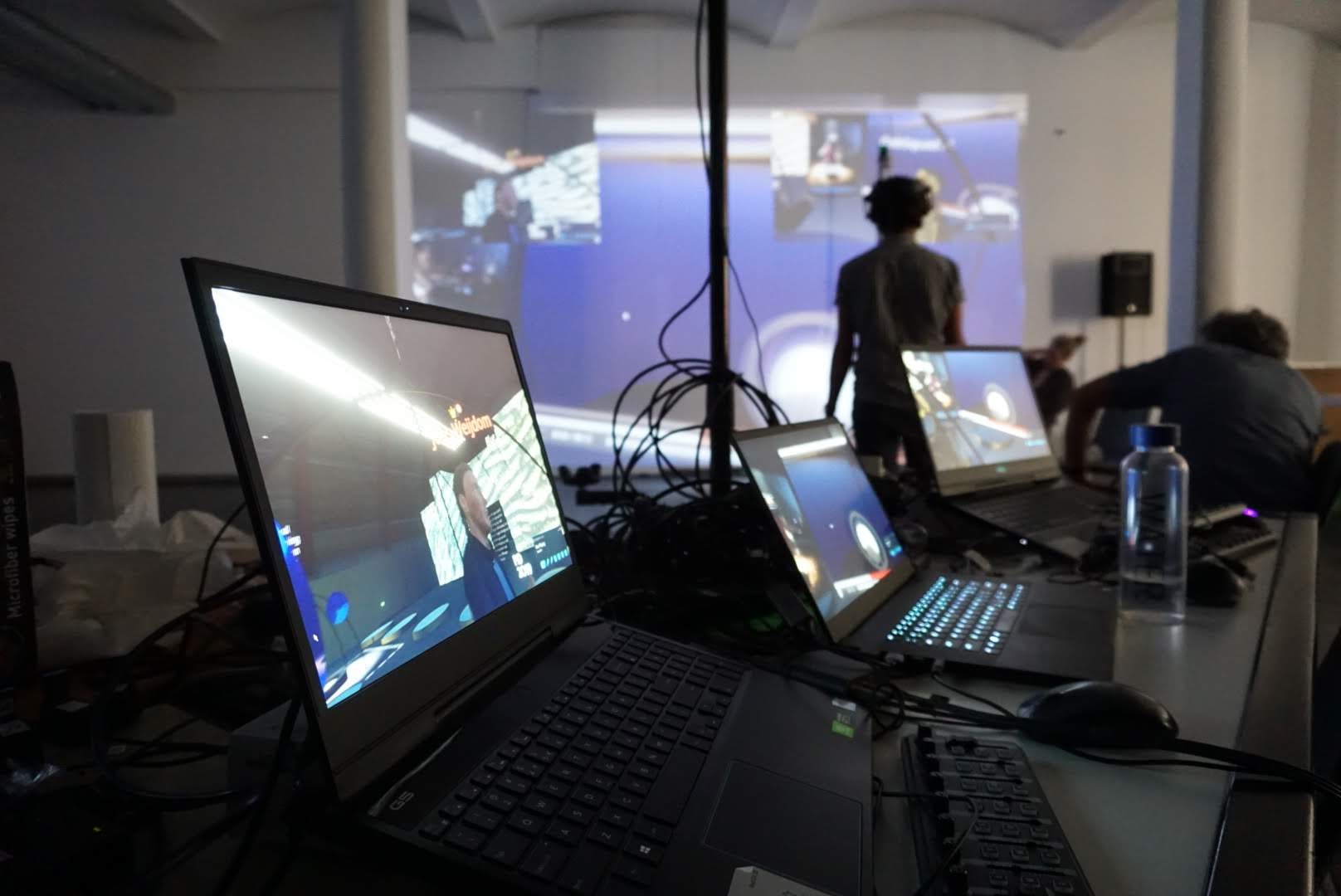
The Berlin company Gob Squad wanted to experiment with a shared virtual space during rehearsals. I built a shared virtual stage they could play like an instrument, with buttons and real objects.
The question was theatrical first and technical second. Makers improvise with buttons, stuff and bodies, not with software and menus, so everything had to become tangible. Korg midi pads became the director's desk: one hit shifts the world. Chairs and the camera are physically tracked, so they exist in both worlds at once, and the virtual image is projected live onto a big screen behind the performers. With full-body motion capture, any performer can take on any character. Out of that workshop, Gob Squad eventually developed the performance 1984: Back to No Future.
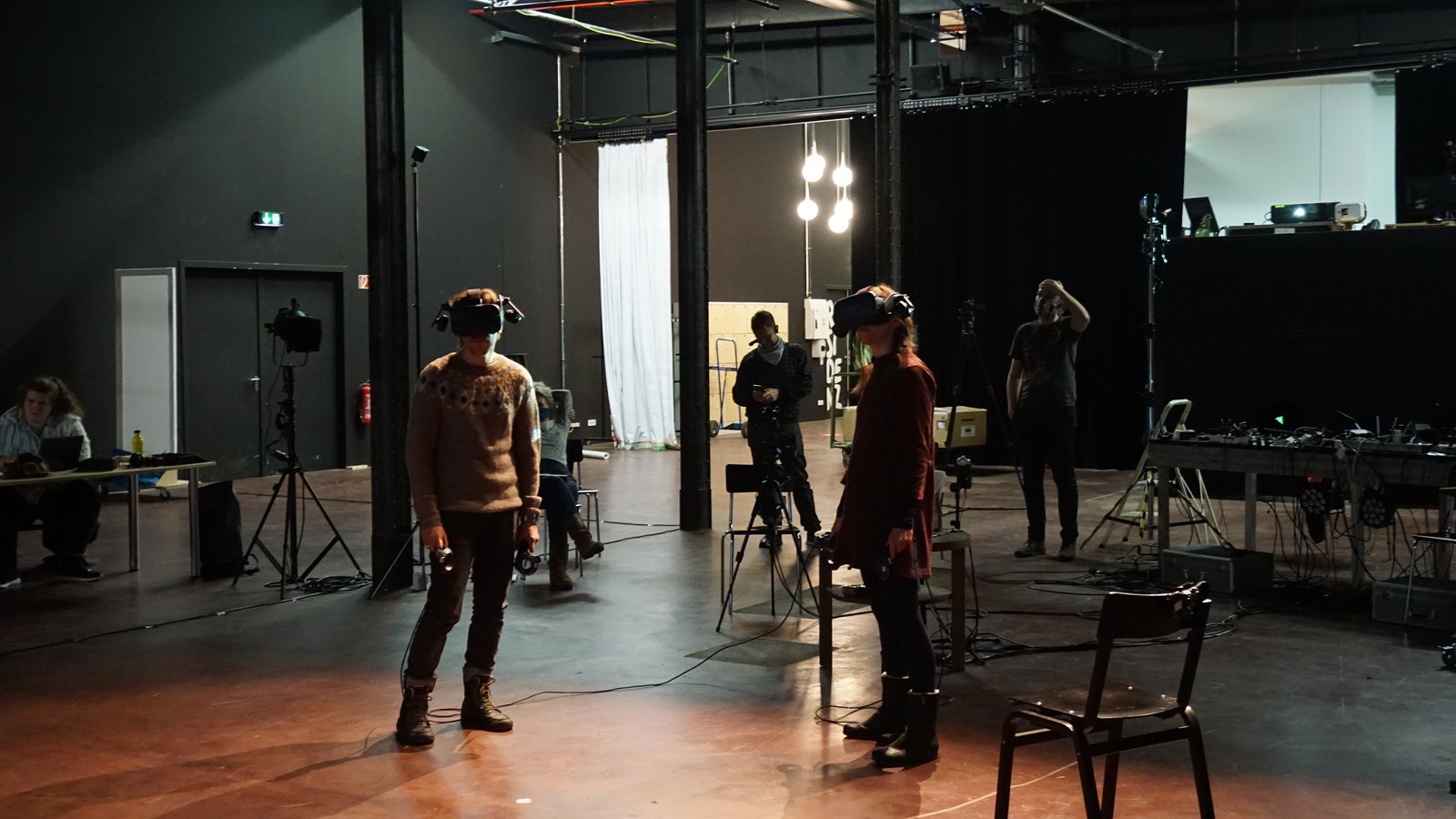
The rehearsal space
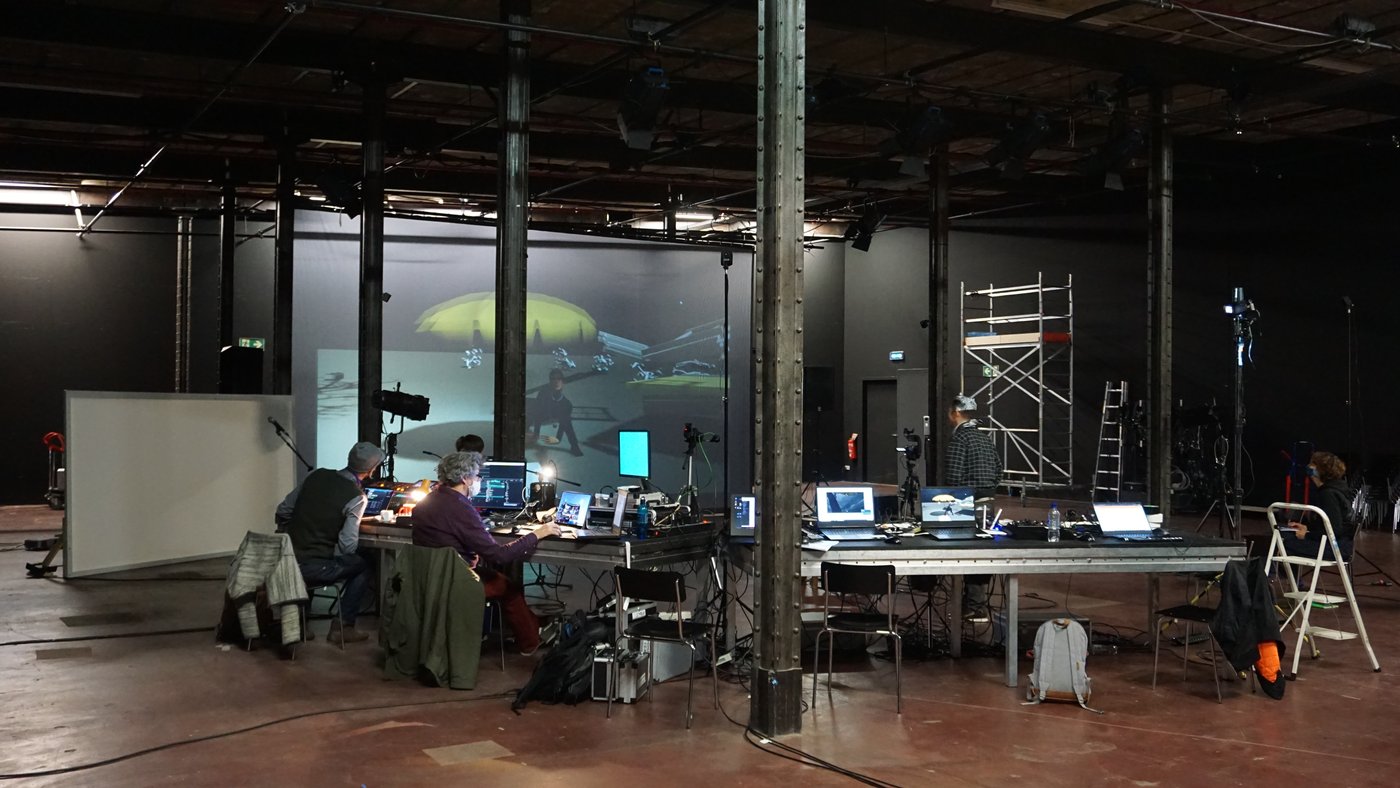
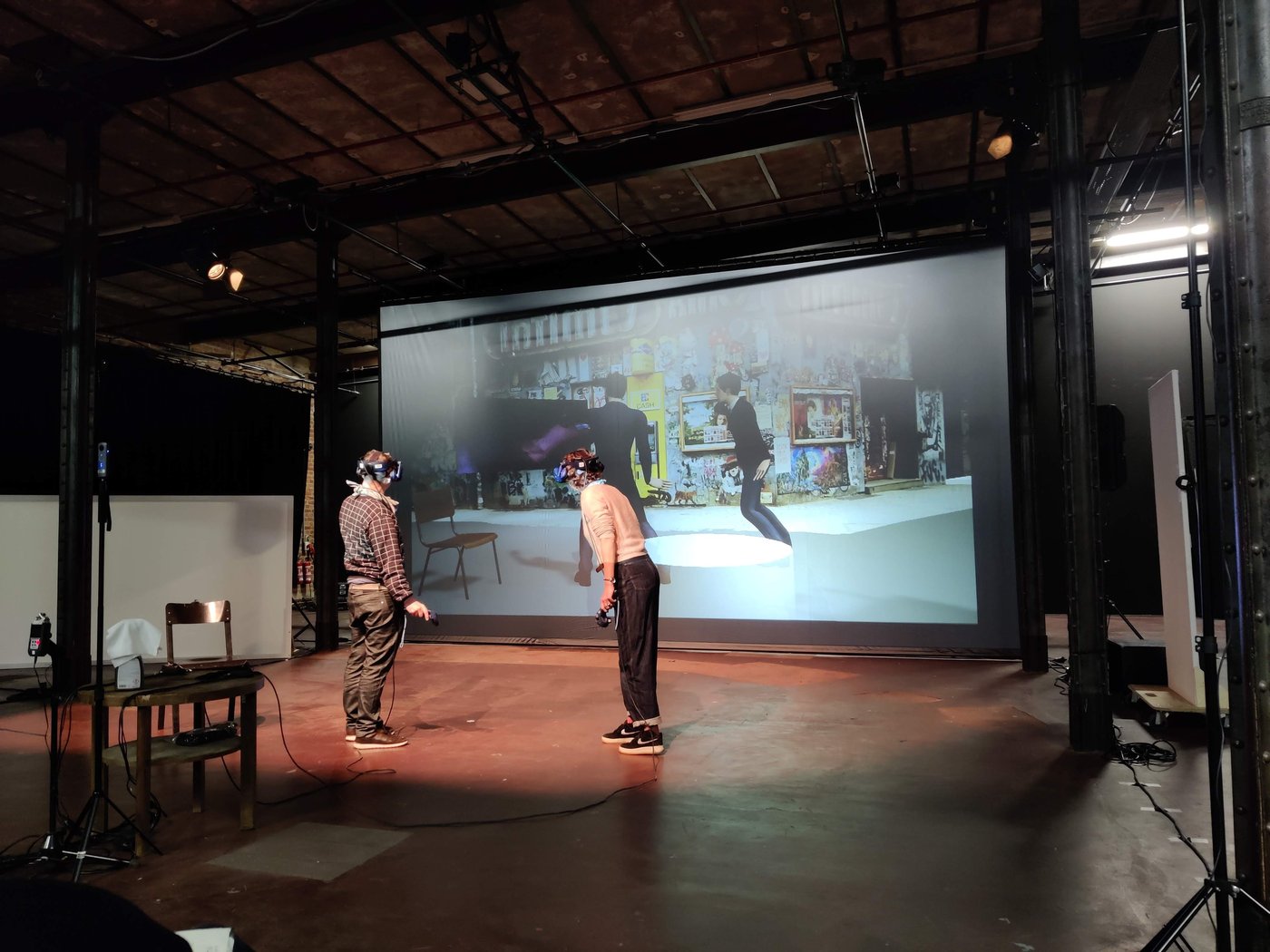
An empty warehouse at Schauspiel Leipzig, a projection screen, a row of laptops and two performers wearing headsets. Everything had to work at rehearsal pace: try, rewind, again.
Two worlds on the same floor
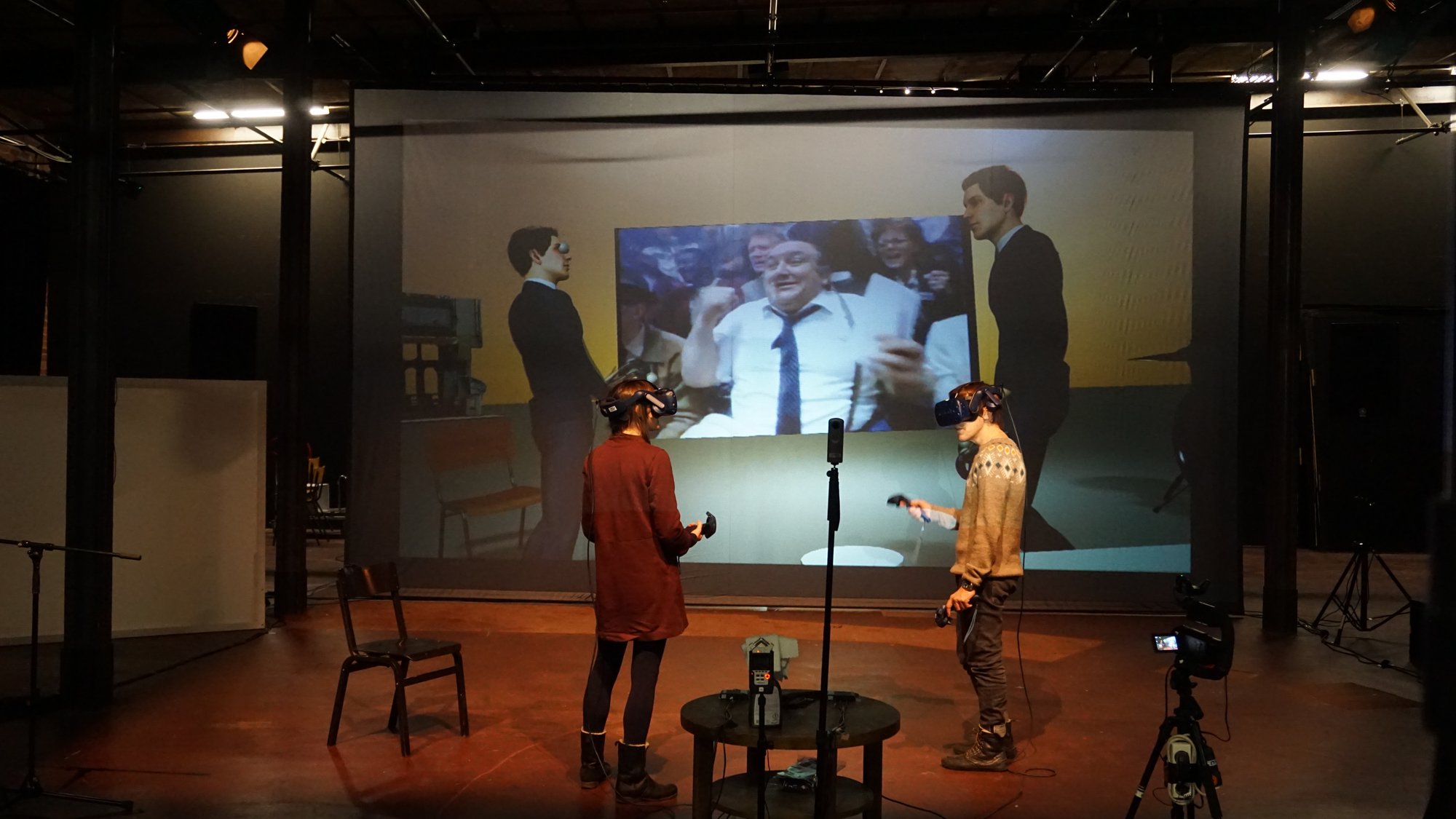
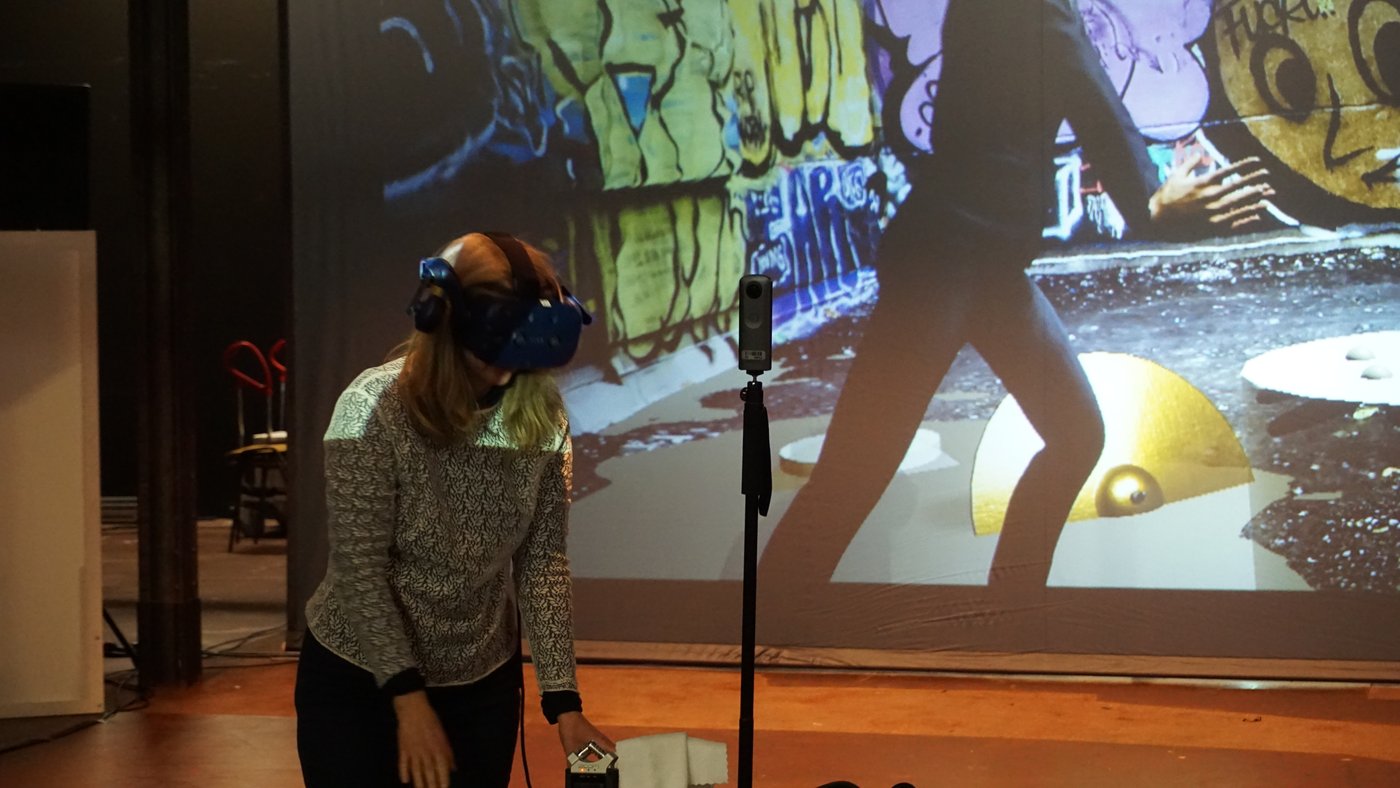
Whatever the performers do in the headset appears live on the screen behind them, filtered through the abstraction the technology brings. That way the rest of the room can watch and think along without wearing a headset themselves.
What you pick up exists twice
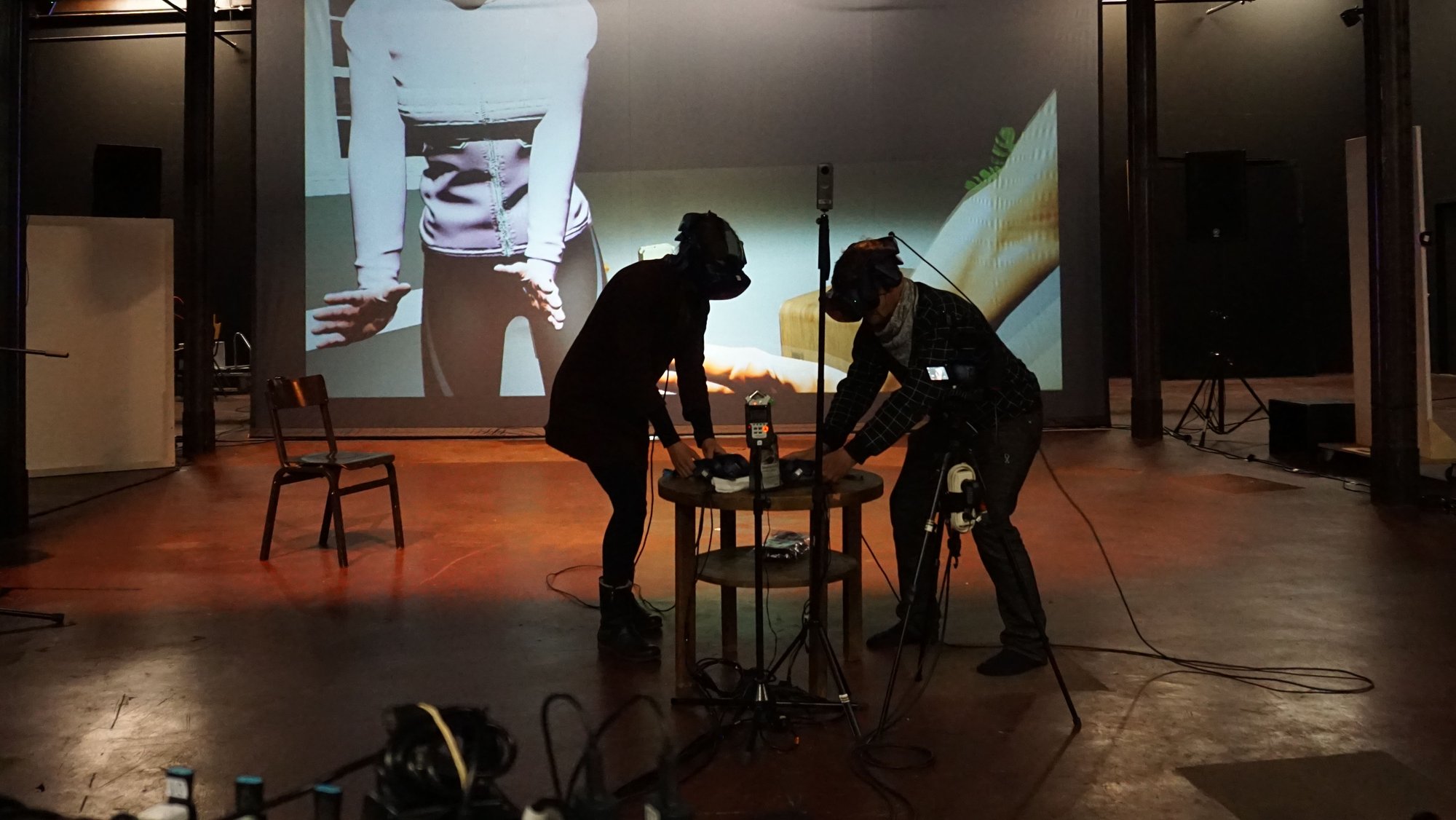
A chair on the floor is also a chair in the world. Same for the camera, which can be carried around as a prop and instantly shows the virtual scene from that angle. That the chair can take any shape in the virtual world - that became the game.
Directing by touch
The world is operated with Korg pads instead of menus. One hit changes a set piece, a lighting state, a character or even gravity. And because there's motion capture underneath, any performer can take on any body: casting becomes a choice you make during the rehearsal instead of in advance.